Cellular & Clinical Mechanism of Indian Gooseberry (Amla) & Oranges in Weak Eyesight, Cataract, Glaucoma & Retina Care (SCEH Guide)
The aqueous humor and crystalline lens of the human eye concentrate Vitamin C at levels 20 to 50 times higher than blood plasma. This Vitamin C shield acts as a natural physiological sunscreen, absorbing UV-B rays and preventing lens crystallin proteins from cross-linking into opaque cataracts.
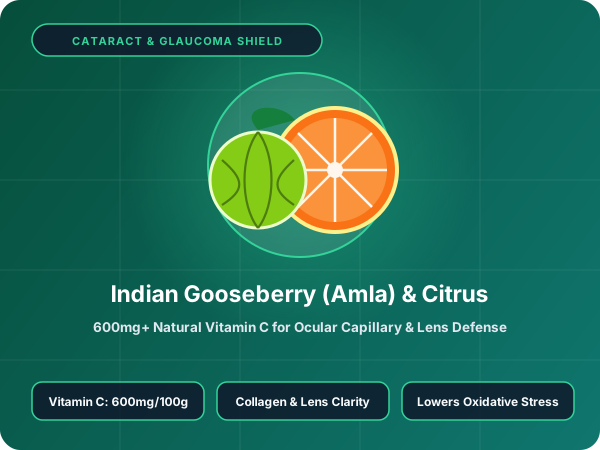
Indian Gooseberry (Amla) contains 600 mg of heat-stable Vitamin C per 100g bound with tannins (Emblicanin A & B), alongside Rutin and Quercetin bioflavonoids that reinforce fragile retinal capillary walls—reducing micro-aneurysms and retinal hemorrhages.
In Glaucoma care, Vitamin C and citrus flavonoids support healthy trabecular meshwork endothelial function and protect optic nerve head retinal ganglion cells against oxidative stress.
The human retina and crystalline lens have the highest metabolic rate and oxygen consumption per gram of any tissue in the body. Continuous exposure to blue light, ultraviolet (UV) radiation, Delhi-NCR air pollution, and elevated blood sugar generates reactive oxygen species (free radicals) that cloud the natural lens (Cataract), damage retinal capillaries (Diabetic Retinopathy), and degenerate the macula (AMD).
Clinical ophthalmic nutrition—modeled on the landmark AREDS-2 (Age-Related Eye Disease Study) and patient dietary protocols at Dr. Shroff's Charity Eye Hospital (SCEH, Daryaganj)—focuses on three targeted classes of fruit phytonutrients: macular carotenoids (Lutein, Zeaxanthin, Beta-Carotene), aqueous-humor antioxidants (Vitamin C), and retinal micro-circulatory bioflavonoids (Anthocyanins).
“Follow the 20-20-20 screen rule, eat Vitamin-A, Lutein & Vitamin-C rich fruits daily, and get an annual dilated fundus checkup at Dr. Shroff's Charity Eye Hospital (011-43524444).”
⚠️ Clinical Precautions, Diabetic Rules & Drug-Nutrient Notes
- •Avoid adding refined white sugar to Amla juice or citrus juice.
- •Patients with severe hyperacidity or active gastric ulcers should take Amla after breakfast rather than on an empty stomach.
- •Always consume whole fresh cut fruit rather than packaged or strained fruit juice so the intact dietary fiber prevents rapid blood glucose spikes.
Key Bioactive Compounds (Per 100g Edible Portion)
Maintains high aqueous humor antioxidant levels to delay nuclear & cortical cataract.
Recycles oxidized Vitamin E and glutathione inside the lens and retina.
Improves ocular blood flow and prevents capillary leakage in diabetic eyes.
Assists retinal alcohol dehydrogenase and insulin sensitivity.
📋 Clinical Prescription Parameters for Indian Gooseberry (Amla) & Oranges
6 Ways Indian Gooseberry (Amla) & Oranges Protects & Repairs in Weak Eyesight, Cataract, Glaucoma & Retina Care (SCEH Guide)
Comprehensive breakdown of how daily consumption of Indian Gooseberry (Amla) & Oranges supports organ recovery, microcirculation, and cellular longevity.
1. Direct Microvascular & Cellular Shield (Ophthalmology)
Indian Gooseberry (Amla) & Oranges delivers concentrated Natural Vitamin C (Ascorbate) (600 mg (Amla) / 53 mg (Orange)) directly to capillary endothelium and specialized ophthalmology tissues, neutralizing reactive oxygen species (ROS) caused by Delhi-NCR air pollution, UV exposure, and metabolic stress.
2. Anti-Inflammatory Cytokine Down-Regulation
Bioactive polyphenols and organic enzymes in Indian Gooseberry (Amla) & Oranges suppress NF-kB, IL-6, and COX-2 inflammatory cascades, reducing tissue edema, morning stiffness, and chronic cellular degeneration without irritating the gastric lining.
3. Glycemic Stability & Insulin-Friendly Fiber Matrix
With a profile of Very Low GI (15–40) • 100% Safe for Diabetic Eye Patients, the intact soluble and insoluble pectin matrix in whole Indian Gooseberry (Amla) & Oranges slows intestinal glucose absorption—preventing post-meal blood sugar spikes and Advanced Glycation End-products (AGEs).
4. Post-Surgical & Tissue Collagen Regeneration
Provides essential vitamin and mineral cofactors (Natural Vitamin C (Ascorbate), Emblicanin A & B Polyphenols, Hesperidin & Rutin (Citrus Flavonoids)) required for rapid epithelial, stromal, vascular, and connective-tissue healing after outpatient procedures or surgery at Dr. Shroff's Charity Eye Hospital (SCEH Daryaganj).
5. Prebiotic Gut-Organ Axis Optimization
Natural fruit fibers and polyphenols feed beneficial colonic Bifidobacteria and Lactobacilli, increasing Short-Chain Fatty Acid (Butyrate) production that lowers systemic inflammation across the gut-ophthalmology axis.
6. Electrolyte, Hydration & Nerve Conduction Balance
Structured cellular water, potassium, and magnesium in Indian Gooseberry (Amla) & Oranges maintain intracellular osmotic balance, healthy blood pressure, and smooth neuromuscular signaling throughout the day.
3 Doctor-Approved Therapeutic Recipes & Preparation Methods for Indian Gooseberry (Amla) & Oranges
1. Morning Fresh Amla-Ginger Optic Tonic
Grate or blend 1 fresh raw Amla in 100 ml lukewarm water with a pinch of roasted cumin (jeera). Drink fresh on an empty stomach for peak ocular ascorbate uptake.
2. Whole Pulp Orange / Mosambi (With White Pith)
Peel 1 fresh orange or sweet lime and eat the segments with the white fibrous pith intact (where 70% of capillary-strengthening Hesperidin resides). Do not strain into packaged juice.
3. Steamed Amla Segments with Black Salt
Lightly steam 2 Amlas for 4 minutes, de-seed, and store in a glass jar. Eat 2 wedges after lunch to aid iron & lutein absorption.
✅ The Right Way to Eat Indian Gooseberry (Amla) & Oranges (100% Nutrient Absorption)
- ✓Eat Whole with Intact Fiber: Chewing whole pieces mixes salivary enzymes with pectin fiber, ensuring slow, steady nutrient release.
- ✓Pair with Soaked Nuts or Seeds: Eating 4–5 soaked almonds or 2 walnut halves alongside your mid-morning fruit boosts fat-soluble carotenoid absorption by 3x and flattens glucose curves.
- ✓Respect the Circadian Window (Empty stomach Amla shot (7:30 AM) or mid-day whole orange (12:00 PM)): Consuming fruit between breakfast and lunch when digestive enzymes and metabolic rate peak prevents fermentation and acidity.
❌ Common Mistakes That Destroy the Benefit of Indian Gooseberry (Amla) & Oranges
- ✕Never Strain Into Clear Juice or Add Sugar: Juicing discards 90% of prebiotic fiber and turns natural fruit sugar into free liquid fructose that spikes insulin and liver fat.
- ✕Avoid Eating Immediately After Heavy Lunch/Dinner: Eating raw fruit right on top of a heavy dal-roti-rice meal delays gastric emptying and causes bloating or reflux.
- ✕Avoid Sprinkling Heavy White Table Salt or Commercial Chaat Masala: Excess sodium raises blood pressure and causes water retention; use a tiny pinch of roasted cumin (jeera) or black pepper instead.
Morning-to-Night (7:00 AM – 8:00 PM) Clinical Diet Plan Incorporating Indian Gooseberry (Amla) & Oranges
Follow this structured 6-meal Indian clinical schedule designed for patients managing Weak Eyesight, Cataract, Glaucoma & Retina Care (SCEH Guide).
Ocular Antioxidant Wake-Up
🍽️ 1 fresh Amla shot in warm water + 5 soaked peeled Almonds & 2 Walnut halves
Clinical Purpose: Floods aqueous humor with Vitamin C and Vitamin E before daylight UV exposure.
Macular Carotenoid Breakfast
🍽️ 1 bowl (150g) Ripe Papaya + Vegetable Oats/Moong Dal Chilla with spinach
Clinical Purpose: Delivers Beta-Carotene, Lutein, and Zeaxanthin with healthy lipids for 3x retinal absorption.
Capillary Bioflavonoid Snack
🍽️ 1 whole Orange or Mosambi (with white pith) + 1 tsp roasted pumpkin seeds
Clinical Purpose: Strengthens retinal capillaries and provides Zinc to transport Vitamin A to the retina.
Lutein & Omega-3 Balanced Meal
🍽️ 2 Multigrain Rotis + Palak/Methi Dal + Carrot-Beetroot Kachumber Salad + Curd with 1 tsp ground Flaxseeds
Clinical Purpose: High macular lutein density + Omega-3 tear film stabilization against dry eyes.
Anthocyanin Vision Refresh
🍽️ 1 cup Pomegranate arils / Black Jamun / Blueberries + Green or Chamomile Tea
Clinical Purpose: Relieves ciliary muscle digital eye strain and boosts retinal blood flow.
Low-Glycemic Recovery Dinner
🍽️ Vegetable Daliya / Grilled Paneer or Fish + Lightly steamed Broccoli & Bell Peppers
Clinical Purpose: Prevents nocturnal glucose spikes and supports overnight corneal epithelial repair.
📅 7-Day (Monday – Sunday) Therapeutic Fruit & Superfood Rotation Chart
How to combine Indian Gooseberry (Amla) & Oranges with complementary ophthalmology fruits and healing foods throughout the week:
| Day | Morning / Mid-Morning Fruit Protocol | Afternoon Synergistic Pairing | Evening Recovery & Dinner Rule |
|---|---|---|---|
| Monday | 🍓 1. Morning Fresh Amla-Ginger Optic Tonic (1 fresh Amla (30g) + 1 medium Nagpur Orange or Mosambi (whole fruit)) | 1 glass Buttermilk (Chaas) or Lemon Water + Carrots & Dark Leafy Spinach (Palak / Bathua) | Light early dinner 3 hours before sleep + 20-min brisk walk |
| Tuesday | 🍓 Papaya & Ripened Mango (150g–200g fresh cubed ripe papaya (1 medium bowl)) | 2. Whole Pulp Orange / Mosambi (With White Pith) at 11:30 AM – 12:30 PM in winter sunlight | Almonds + Fennel (Saunf) + Thread Mishri Mix |
| Wednesday | 🍓 1. Morning Fresh Amla-Ginger Optic Tonic (1 fresh Amla (30g) + 1 medium Nagpur Orange or Mosambi (whole fruit)) | Seasonal salad + Flaxseeds (Alsi), Walnuts & Chia Seeds | Warm herbal/turmeric infusion + zero screen/stress 1 hr before bed |
| Thursday | 🍓 Blueberries, Black Jamun & Pomegranate (1 small cup (100g) Black Jamun / Pomegranate arils or ½ cup Blueberries) | 3. Steamed Amla Segments with Black Salt (After lunch (1:30 PM)) | Low-sodium Moong Dal Khichdi or grilled protein with steamed greens |
| Friday | 🍓 1. Morning Fresh Amla-Ginger Optic Tonic (1 fresh Amla (30g) + 1 medium Nagpur Orange or Mosambi (whole fruit)) | 5 soaked Almonds + 2 Walnuts + Papaya & Ripened Mango | Carrots & Dark Leafy Spinach (Palak / Bathua) |
| Saturday | 🍓 2. Whole Pulp Orange / Mosambi (With White Pith) (1 fresh Amla (30g) + 1 medium Nagpur Orange or Mosambi (whole fruit)) | Hydrating electrolyte fruit bowl + roasted seeds | Early home-cooked soup & multigrain roti by 7:30 PM |
| Sunday | 🍓 Mixed Ophthalmology Fruit Platter: Indian Gooseberry (Amla) & Oranges + Papaya & Ripened Mango & Blueberries, Black Jamun & Pomegranate | 20 mins morning sunlight exposure + Almonds + Fennel (Saunf) + Thread Mishri Mix | Weekly meal prep: soak nuts/seeds & wash fresh fruits in baking soda water |
✅ Daily Healing Foods to Eat Alongside Indian Gooseberry (Amla) & Oranges
Spinach delivers 12,000+ mcg of Lutein & Zeaxanthin per 100g—the highest of any food—while carrots supply Beta-Carotene.
Traditional Ayurvedic optic nerve tonic rich in Vitamin E (alpha-tocopherol), riboflavin, and cooling essential oils.
Plant-based Omega-3 (ALA) fortifies the lipid layer of the tear film, preventing evaporative dry eyes and Meibomian gland dysfunction.
Glaucoma ('silent thief of sight') and early Diabetic Retinopathy have zero early symptoms until detected via OCT and fundus exam.
⚠️ Foods & Habits to Strictly Avoid in Weak Eyesight, Cataract, Glaucoma & Retina Care (SCEH Guide)
Clinical Risk: Spikes HbA1c, causing osmotic lens swelling (myopic shift), premature cataract, and proliferative diabetic retinopathy.
Clinical Risk: Doubles the risk of Nuclear Cataract and increases Age-Related Macular Degeneration (AMD) risk by 400%.
Clinical Risk: Clogs choroidal micro-vessels and worsens Meibomian gland blockage in chronic dry eye patients.
How to Select, Wash (Remove Chemical Wax & Pesticides) & Store Indian Gooseberry (Amla) & Oranges
Choose Naturally Ripened Fruit
Look for uniform natural aroma, firm-yet-yielding texture, and natural skin speckles. Avoid artificially shiny or calcium-carbide ripened fruits with green patches and chemical odor.
Baking Soda & Warm Water Wash
Soak whole fruits in a bowl of lukewarm water with 1 tsp food-grade baking soda (sodium bicarbonate) for 12–15 minutes, then rinse thoroughly under running potable water to remove 96% of surface pesticides and wax.
Cut Immediately Before Eating
Vitamin C and polyphenols oxidize rapidly when exposed to air and light. Always slice or peel Indian Gooseberry (Amla) & Oranges within 10 minutes of consumption—never buy pre-cut roadside fruit.
Bring to Room Temp Before Eating
If stored in the refrigerator crisper drawer, take the fruit out 30 minutes before eating so it reaches room temperature—active digestive enzymes (like Papain and Bromelain) work best at body temperature.
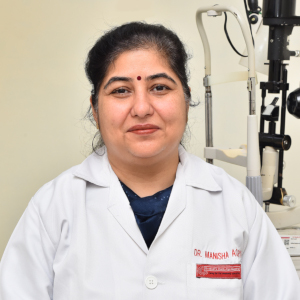
Top Ophthalmology Specialist Doctors & Hospital for Weak Eyesight, Cataract, Glaucoma & Retina Care (SCEH Guide)
Therapeutic nutrition works hand-in-hand with timely specialist evaluation. Click any doctor below for complete OPD timings and profile:







Frequently Asked Questions About Indian Gooseberry (Amla) & Oranges & Weak Eyesight, Cataract, Glaucoma & Retina Care (SCEH Guide)
Q: Can eating papaya, Amla, and carrots remove my spectacle number completely?
While fruits cannot alter the axial length of the eyeball once refractive error (myopia/hyperopia) is established, a diet rich in Vitamin A, Lutein, Zeaxanthin, and Vitamin C prevents further retinal weakening, eliminates accommodative eye strain (pseudo-myopia), protects against dry eyes, and slows cataract and macular degeneration by 25–35%.
Q: Which fruits are safe for patients with Diabetic Retinopathy?
Patients with Diabetic Retinopathy should choose low-glycemic, anthocyanin- and Vitamin C-rich fruits: Indian Gooseberry (Amla), Black Jamun, Guava, Blueberries, Pomegranate (1 small cup), and Orange segments, while avoiding fruit juices, canned fruits, and overripe bananas.
Q: What is the best time and daily quantity of Indian Gooseberry (Amla) & Oranges for Weak Eyesight, Cataract, Glaucoma & Retina Care (SCEH Guide)?
The ideal daily clinical serving is 1 fresh Amla (30g) + 1 medium Nagpur Orange or Mosambi (whole fruit) consumed at Empty stomach Amla shot (7:30 AM) or mid-day whole orange (12:00 PM). Eating it whole during this window maximizes absorption of Natural Vitamin C (Ascorbate), Emblicanin A & B Polyphenols, Hesperidin & Rutin (Citrus Flavonoids), Chromium & Zinc Co-Factors.
Q: Can Indian Gooseberry (Amla) & Oranges replace my prescribed Ophthalmology medicines or eye drops?
No. Therapeutic fruits and clinical diets are powerful adjuncts that reduce oxidative damage, speed recovery, and improve metabolic markers, but you must continue all prescribed medications and regular checkups at Dr. Shroff's Charity Eye Hospital (SCEH Daryaganj).
Other Recommended Fruits for Weak Eyesight, Cataract, Glaucoma & Retina Care (SCEH Guide)
🍓 Papaya & Ripened Mango
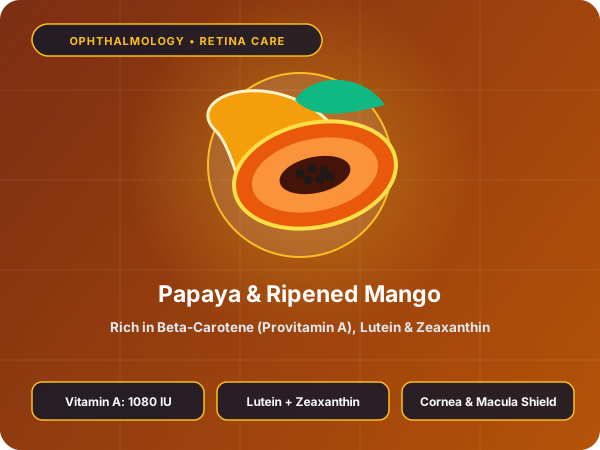
Loaded with Beta-Carotene (Vitamin A), lutein, and zeaxanthin that protect the retina and cornea from macular degeneration and night blindness.
Open Complete Papaya & Ripened Mango Monograph →
🍓 Blueberries, Black Jamun & Pomegranate
Anthocyanins improve retinal micro-circulation (vital for diabetic retinopathy), speed up dark adaptation, and relieve digital eye strain.
Open Complete Blueberries, Black Jamun & Pomegranate Monograph →Related Evidence-Based Health & Nutrition Articles
View All Health Blogs →
Dr. Shroff's Charity Eye Hospital (SCEH Daryaganj - sceh.net): Complete Patient Guide, OPD Timings & Specialties
Best Fruits for Eyesight, Retina Protection & Preventing Cataract Naturally
Diabetic Retinopathy & Blood Sugar Control: Low-GI Indian Fruits That Protect Your Retina