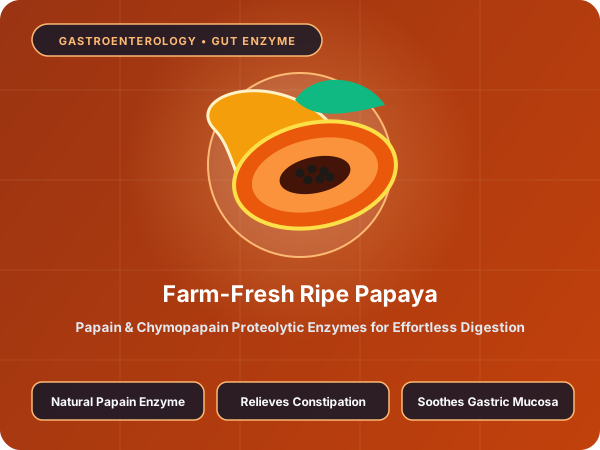
Cellular & Clinical Mechanism of Ripe Papaya in Acidity, Fatty Liver, IBS & Constipation
Ripe papaya contains two potent proteolytic enzymes—Papain and Chymopapain—that assist gastric pepsin and pancreatic proteases in hydrolyzing heavy dietary proteins into easily absorbable amino acids, eliminating post-meal bloating, belching, and acid reflux.
Its combination of 88% structured water and soluble dietary fiber forms a soft hydro-gel in the colon, normalizing bowel transit time in patients with chronic constipation and IBS-C (randomized clinical trials show significant relief in bloating and stool consistency within 14 days).
Non-Alcoholic Fatty Liver Disease (NAFLD / MASLD—affecting nearly 1 in 3 urban adults in Delhi-NCR), Gastroesophageal Reflux Disease (GERD/Acidity), Irritable Bowel Syndrome (IBS), and chronic constipation stem from gut microbiome dysbiosis, low prebiotic fiber intake, and excess refined fructose/carbohydrates.
Gastro-hepatology therapeutic fruits work by supplying proteolytic digestive enzymes (Papain), mucosal-coating tannins and mucilage (Bael Marmelosin), and soluble prebiotic Pectin fiber (Stewed Apples & Pears) that fermentation bacteria convert into Butyrate—healing 'leaky gut' and mobilizing liver fat.
“Keep a strict 3-hour gap between dinner and sleep; eat ripe papaya or Bael fruit in the morning and chew roasted fennel (Saunf) after meals.”
⚠️ Clinical Precautions, Diabetic Rules & Drug-Nutrient Notes
- •Pregnant women must strictly avoid unripe or semi-ripe green papaya (as latex pepsin can trigger uterine contractions); only fully ripe yellow-orange papaya in moderation is safe.
- •Always consume whole fresh cut fruit rather than packaged or strained fruit juice so the intact dietary fiber prevents rapid blood glucose spikes.
Key Bioactive Compounds (Per 100g Edible Portion)
Accelerates gastric emptying and prevents acid reflux / indigestion.
Softens stool bulk and feeds beneficial colonic Bifidobacteria.
Protects stomach mucosal lining against H. pylori and NSAID irritation.
Supports enterocyte mucosal cell turnover and peristalsis.
📋 Clinical Prescription Parameters for Ripe Papaya
6 Ways Ripe Papaya Protects & Repairs in Acidity, Fatty Liver, IBS & Constipation
Comprehensive breakdown of how daily consumption of Ripe Papaya supports organ recovery, microcirculation, and cellular longevity.
1. Direct Microvascular & Cellular Shield (Gastroenterology)
Ripe Papaya delivers concentrated Papain & Chymopapain (Active Proteolytic Enzymes) directly to capillary endothelium and specialized gastroenterology tissues, neutralizing reactive oxygen species (ROS) caused by Delhi-NCR air pollution, UV exposure, and metabolic stress.
2. Anti-Inflammatory Cytokine Down-Regulation
Bioactive polyphenols and organic enzymes in Ripe Papaya suppress NF-kB, IL-6, and COX-2 inflammatory cascades, reducing tissue edema, morning stiffness, and chronic cellular degeneration without irritating the gastric lining.
3. Glycemic Stability & Insulin-Friendly Fiber Matrix
With a profile of Medium GI (56) • High Water & Soluble Fiber, the intact soluble and insoluble pectin matrix in whole Ripe Papaya slows intestinal glucose absorption—preventing post-meal blood sugar spikes and Advanced Glycation End-products (AGEs).
4. Post-Surgical & Tissue Collagen Regeneration
Provides essential vitamin and mineral cofactors (Papain & Chymopapain, Soluble & Insoluble Fiber, Carpaine Alkaloid & Carotenoids) required for rapid epithelial, stromal, vascular, and connective-tissue healing after outpatient procedures or surgery at AIIMS Gastroenterology & Amrita Faridabad GI Sciences.
5. Prebiotic Gut-Organ Axis Optimization
Natural fruit fibers and polyphenols feed beneficial colonic Bifidobacteria and Lactobacilli, increasing Short-Chain Fatty Acid (Butyrate) production that lowers systemic inflammation across the gut-gastroenterology axis.
6. Electrolyte, Hydration & Nerve Conduction Balance
Structured cellular water, potassium, and magnesium in Ripe Papaya maintain intracellular osmotic balance, healthy blood pressure, and smooth neuromuscular signaling throughout the day.
3 Doctor-Approved Therapeutic Recipes & Preparation Methods for Ripe Papaya
1. Morning Gut-Reset Papaya Bowl
Eat 200g fresh ripe papaya cubes 30 minutes before breakfast (with a pinch of roasted jeera powder, no chat masala) to stimulate natural morning peristalsis.
2. Post-Heavy Meal Digestive Aid
Eat 3–4 cubes of ripe papaya 45 minutes after a high-protein meal (paneer, dal, or non-veg) to prevent gas and heaviness.
3. Papaya & Soaked Chia Smoothie for Constipation
Blend 1 cup papaya with 1 tsp pre-soaked chia seeds and water for effortless morning bowel clearance.
✅ The Right Way to Eat Ripe Papaya (100% Nutrient Absorption)
- ✓Eat Whole with Intact Fiber: Chewing whole pieces mixes salivary enzymes with pectin fiber, ensuring slow, steady nutrient release.
- ✓Pair with Soaked Nuts or Seeds: Eating 4–5 soaked almonds or 2 walnut halves alongside your mid-morning fruit boosts fat-soluble carotenoid absorption by 3x and flattens glucose curves.
- ✓Respect the Circadian Window (Morning breakfast (8:30 AM) or 4:00 PM snack): Consuming fruit between breakfast and lunch when digestive enzymes and metabolic rate peak prevents fermentation and acidity.
❌ Common Mistakes That Destroy the Benefit of Ripe Papaya
- ✕Never Strain Into Clear Juice or Add Sugar: Juicing discards 90% of prebiotic fiber and turns natural fruit sugar into free liquid fructose that spikes insulin and liver fat.
- ✕Avoid Eating Immediately After Heavy Lunch/Dinner: Eating raw fruit right on top of a heavy dal-roti-rice meal delays gastric emptying and causes bloating or reflux.
- ✕Avoid Sprinkling Heavy White Table Salt or Commercial Chaat Masala: Excess sodium raises blood pressure and causes water retention; use a tiny pinch of roasted cumin (jeera) or black pepper instead.
Morning-to-Night (7:00 AM – 8:00 PM) Clinical Diet Plan Incorporating Ripe Papaya
Follow this structured 6-meal Indian clinical schedule designed for patients managing Acidity, Fatty Liver, IBS & Constipation.
Mucosal & Microbiome Wake-Up
🍽️ 1 bowl Warm Stewed Apple with Cinnamon OR 200g Ripe Papaya cubes
Clinical Purpose: Coats gastric mucosa and delivers prebiotic Pectin & Papain enzymes.
Gut-Soothing Breakfast
🍽️ Moong Dal Chilla or Vegetable Poha/Idli (fermented probiotic) + Coconut Chutney
Clinical Purpose: Light, easily digestible fermented breakfast without maida or heavy oil.
Hepatic & Colonic Cooling Snack
🍽️ 1 glass fresh unsweetened Bael Fruit Sharbat OR 1 whole Nashpati (Pear)
Clinical Purpose: Heals IBS/ulcer lining and binds bile acids to reverse Fatty Liver.
Balanced Hepatoprotective Lunch
🍽️ 2 Missi/Jowar Rotis + Lauki/Tori Sabzi + Yellow Moong Dal + 1 glass Fresh Chaas with Jeera & Hing
Clinical Purpose: Provides Choline, Betaine, and live Lactobacillus probiotics.
Alkaline Afternoon Refresh
🍽️ Tender Coconut Water + 4 soaked Walnuts & 1 tsp roasted Fennel (Saunf)
Clinical Purpose: Neutralizes afternoon gastric acid and supplies Omega-3 for liver fat reduction.
Early 3-Hour Gap Dinner
🍽️ Warm Vegetable & Moong Dal Khichdi with ½ tsp Cow Ghee (supplies Butyrate)
Clinical Purpose: Ensures complete gastric emptying before sleep to prevent night reflux.
📅 7-Day (Monday – Sunday) Therapeutic Fruit & Superfood Rotation Chart
How to combine Ripe Papaya with complementary gastroenterology fruits and healing foods throughout the week:
| Day | Morning / Mid-Morning Fruit Protocol | Afternoon Synergistic Pairing | Evening Recovery & Dinner Rule |
|---|---|---|---|
| Monday | 🍓 1. Morning Gut-Reset Papaya Bowl (1 bowl (200g) fresh ripe papaya cubes) | 1 glass Buttermilk (Chaas) or Lemon Water + Fresh Homemade Buttermilk (Chaas) with Roasted Jeera & Hing | Light early dinner 3 hours before sleep + 20-min brisk walk |
| Tuesday | 🍓 Wood Apple (Bael Fruit) & Banana (1 glass fresh Bael pulp drink (150 ml) or 1 small ripe Banana) | 2. Post-Heavy Meal Digestive Aid at 2:15 PM | Moong Dal Khichdi & Lauki (Bottle Gourd) |
| Wednesday | 🍓 1. Morning Gut-Reset Papaya Bowl (1 bowl (200g) fresh ripe papaya cubes) | Seasonal salad + Black Coffee (Unsweetened, 1 Cup) & Walnuts for Fatty Liver | Warm herbal/turmeric infusion + zero screen/stress 1 hr before bed |
| Thursday | 🍓 Stewed Apple & Pear (Nashpati) (1 medium Apple (stewed or whole with skin) or 1 crunchy Nashpati (Pear)) | 3. Papaya & Soaked Chia Smoothie for Constipation (8:00 AM) | Low-sodium Moong Dal Khichdi or grilled protein with steamed greens |
| Friday | 🍓 1. Morning Gut-Reset Papaya Bowl (1 bowl (200g) fresh ripe papaya cubes) | 5 soaked Almonds + 2 Walnuts + Wood Apple (Bael Fruit) & Banana | Fresh Homemade Buttermilk (Chaas) with Roasted Jeera & Hing |
| Saturday | 🍓 2. Post-Heavy Meal Digestive Aid (1 bowl (200g) fresh ripe papaya cubes) | Hydrating electrolyte fruit bowl + roasted seeds | Early home-cooked soup & multigrain roti by 7:30 PM |
| Sunday | 🍓 Mixed Gastroenterology Fruit Platter: Ripe Papaya + Wood Apple (Bael Fruit) & Banana & Stewed Apple & Pear (Nashpati) | 20 mins morning sunlight exposure + Moong Dal Khichdi & Lauki (Bottle Gourd) | Weekly meal prep: soak nuts/seeds & wash fresh fruits in baking soda water |
✅ Daily Healing Foods to Eat Alongside Ripe Papaya
Provides live lactic acid probiotics that restore gut microbiome diversity and soothe acid reflux.
Alkaline, zero-irritant protein and soluble fiber that give the liver and stomach complete digestive rest.
Hepatology guidelines confirm 1–2 cups of plain black coffee (chlorogenic acid + kahweol) reduces liver fibrosis risk.
⚠️ Foods & Habits to Strictly Avoid in Acidity, Fatty Liver, IBS & Constipation
Clinical Risk: Fructose and alcohol are metabolized 100% in the liver directly into triglycerides, causing Fatty Liver & Cirrhosis.
Clinical Risk: Relaxes the lower esophageal sphincter (LES), causing severe nocturnal acid reflux and erosive gastritis.
How to Select, Wash (Remove Chemical Wax & Pesticides) & Store Ripe Papaya
Choose Naturally Ripened Fruit
Look for uniform natural aroma, firm-yet-yielding texture, and natural skin speckles. Avoid artificially shiny or calcium-carbide ripened fruits with green patches and chemical odor.
Baking Soda & Warm Water Wash
Soak whole fruits in a bowl of lukewarm water with 1 tsp food-grade baking soda (sodium bicarbonate) for 12–15 minutes, then rinse thoroughly under running potable water to remove 96% of surface pesticides and wax.
Cut Immediately Before Eating
Vitamin C and polyphenols oxidize rapidly when exposed to air and light. Always slice or peel Ripe Papaya within 10 minutes of consumption—never buy pre-cut roadside fruit.
Bring to Room Temp Before Eating
If stored in the refrigerator crisper drawer, take the fruit out 30 minutes before eating so it reaches room temperature—active digestive enzymes (like Papain and Bromelain) work best at body temperature.
Top Gastroenterology Specialist Doctors & Hospital for Acidity, Fatty Liver, IBS & Constipation
Therapeutic nutrition works hand-in-hand with timely specialist evaluation. Click any doctor below for complete OPD timings and profile:






Frequently Asked Questions About Ripe Papaya & Acidity, Fatty Liver, IBS & Constipation
Q: Can Grade 1 and Grade 2 Fatty Liver be reversed completely with fruit and diet?
Yes! Hepatologists at AIIMS, Medanta, and Amrita confirm that losing 7–10% of body weight, eliminating sugar/maida/alcohol, and following a high-pectin, high-fiber diet (Stewed Apple, Pear, Papaya, Leafy Greens, Walnuts) can completely reverse Grade 1 and Grade 2 Fatty Liver within 3 to 6 months.
Q: What is the best time and daily quantity of Ripe Papaya for Acidity, Fatty Liver, IBS & Constipation?
The ideal daily clinical serving is 1 bowl (200g) fresh ripe papaya cubes consumed at Morning breakfast (8:30 AM) or 4:00 PM snack. Eating it whole during this window maximizes absorption of Papain & Chymopapain, Soluble & Insoluble Fiber, Carpaine Alkaloid & Carotenoids, Folate & Potassium.
Q: Can Ripe Papaya replace my prescribed Gastroenterology medicines or eye drops?
No. Therapeutic fruits and clinical diets are powerful adjuncts that reduce oxidative damage, speed recovery, and improve metabolic markers, but you must continue all prescribed medications and regular checkups at AIIMS Gastroenterology & Amrita Faridabad GI Sciences.
Other Recommended Fruits for Acidity, Fatty Liver, IBS & Constipation
🍓 Wood Apple (Bael Fruit) & Banana
Natural gastro-protective mucilage, Marmelosin, and pectin that heal chronic colitis, IBS-D, acid reflux, and stomach ulcers.
Open Complete Wood Apple (Bael Fruit) & Banana Monograph →
🍓 Stewed Apple & Pear (Nashpati)
Rich in soluble Pectin prebiotic fiber and chlorogenic acid that feed healthy gut bacteria and reverse Grade-1 & Grade-2 Fatty Liver.
Open Complete Stewed Apple & Pear (Nashpati) Monograph →Related Evidence-Based Health & Nutrition Articles
View All Health Blogs →
How to Reverse Grade 1 & 2 Fatty Liver, Acidity & IBS with Indian Fruits & Gut Diet

Dr. Shroff's Charity Eye Hospital (SCEH Daryaganj - sceh.net): Complete Patient Guide, OPD Timings & Specialties
Best Fruits for Eyesight, Retina Protection & Preventing Cataract Naturally